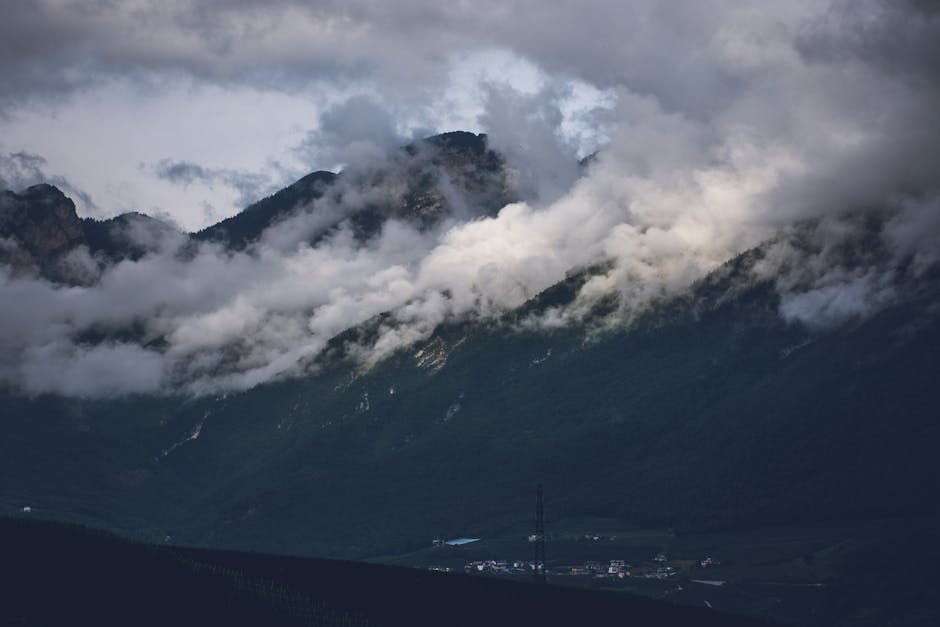
The Dazzling Darkness: Why the Deepest Spiritual Light Can’t Be Seen
There’s a strange phrase that keeps turning up across the world’s contemplative traditions. Christian mystics used it. So did Neoplatonists, Kabbalists, and Sufi poets. It shows up in the Upanishads and in Zen. The phrase is “dazzling darkness,” or sometimes “luminous darkness,” “brilliant dark,” or simply “the divine dark.”
It sounds like a contradiction. Darkness that dazzles? Light that blinds? But everyone who’s used this language insists they’re being precise, not poetic. They’re pointing to something real, something you may have touched yourself without knowing what to call it.
So what is this darkness, and why does it keep appearing at the summit of spiritual experience?
Not Absence, But Overflow
The first thing to understand is that this darkness has nothing to do with ignorance, depression, or the absence of God. It’s the opposite. The mystics say the source is called “dark” because it’s too bright. Not because light is missing, but because there’s more light than the eyes of the mind can handle.
Think of staring directly at the sun. You don’t see blackness because the sun is dim. You see blackness because your retina can’t process that intensity. The sun overwhelms the organ designed to see it. Something similar happens in contemplative experience. Awareness, the source of all knowing, can’t be known in the way everything else is known. It’s too close, too immediate, too total.
Pseudo-Dionysius, a 5th-century Christian mystic, put it this way: God dwells in “unapproachable light,” and that light, to the thinking mind, registers as darkness. Not because God is hidden, but because our ordinary way of knowing simply can’t wrap around what’s there.
The Kena Upanishad says something remarkably similar: “That which cannot be thought by the mind, but by which the mind thinks — know that to be Brahman.”
You can’t see what you’re seeing with.
The Limits of Subject-Object Knowing
Here’s why this matters practically, not just philosophically.
All ordinary knowledge works on a subject-object model. There’s a knower, and there’s a known. You look at a tree: you’re the subject, the tree is the object. You think a thought: you’re the thinker, the thought is the object. This split is how the mind operates. It can only know things that stand apart from it, things it can point at, name, and contain.
But awareness itself doesn’t stand apart from you. It’s not an object over there that you can turn your attention toward and examine. It’s the attention itself. It’s what’s doing the looking. And so when you try to find it using normal cognition — concepts, categories, images, you come up empty. Not because nothing is there, but because what’s there isn’t the kind of thing that shows up as an object.
This is the “darkness.” It’s the experience of running out of road. The mind reaches its edge, finds nothing it can grasp, and reports failure. But the mystics insist: that apparent failure is actually arrival. You’ve reached the threshold where thinking stops and being begins.
Meister Eckhart, the 14th-century Dominican, called it Abgeschiedenheit — detachment, or cutting away. You cut away every image, every concept, every idea of what God is, until nothing remains. And what remains, paradoxically, is everything. The dark isn’t empty. It’s so full that no container can hold it.
You Cannot Look at What You Are
There’s a simple experiment that makes this tangible.
Right now, try to see your own eyes. Not in a mirror — directly. Try to turn your seeing back on itself and catch it in the act.
What happens? You don’t find darkness in the sense of blackout. You find… nothing graspable. Yet seeing is obviously happening. There’s this open, clear capacity for experience that you can’t pin down as a thing. It doesn’t have edges. It doesn’t have a color. It’s not located anywhere you can point to.
That’s the dazzling darkness in miniature. Not scary, not exotic. Just the ordinary fact that awareness can’t objectify itself. You are it, so you can’t stand outside it and look back.
Douglas Harding used to ask people to point at their own face. What do you actually find where you’re looking from? Not a head, not a brain, not a person. Just open capacity. Boundless room for the world. That room is both invisible and utterly obvious. Dark to thought, blazingly present to itself.
Why the Mind Resists This
The mind doesn’t enjoy this territory. And honestly, that’s understandable.
The mind’s entire job is to differentiate, categorize, and control. It works by making things distinct. Hot versus cold. Self versus other. This versus that. When it encounters something that can’t be differentiated — something that has no boundaries, no opposite, no contrast — it gets uncomfortable. It feels like intellectual vertigo.
And so the mind does what it always does when threatened: it makes a story. “This is just nihilism.” “This is vague.” “There’s nothing useful here.” “I need to get back to practical reality.” It prefers a well-lit room of familiar concepts to the uncharted, uncategorizeable openness of its own source.
This resistance is completely natural. The 14th-century author of The Cloud of Unknowing anticipated it perfectly. He described this cloud as a space between you and God that can’t be penetrated by thought — only by love. The mind will protest. The emotions will squirm. But if you persist in simply being present, without demanding that the experience fit into a known category, something shifts.
You stop trying to see the light, and you start being it.
The Difference Between Thinking About It and Resting In It
This is where most spiritual reading stops and most spiritual living barely starts.
Reading about dazzling darkness is interesting. It gives you a map. But the map is made of concepts, and concepts are precisely what can’t enter this territory. It’s like reading about swimming. The description might be accurate, but it can’t make you wet.
The actual “practice” (if you can call it that) is surprisingly simple. You sit quietly. Thoughts arise, and you let them pass. Images appear, and you let them dissolve. Feelings come and go, and you stay present. And gradually, the part of you that wants to know what’s happening runs out of steam. It gets bored, or tired, or simply stops.
What remains isn’t blankness. It’s alive, aware, spacious. You might call it peace, but that’s already adding a concept. You might call it presence, but that’s already naming it. The mystics, being careful, called it darkness — because the moment you name it, you’ve already stepped back into the conceptual mind that can’t reach it.
Rumi had a line for this: “Out beyond ideas of wrongdoing and rightdoing, there is a field. I’ll meet you there.”
That field isn’t dark in any ordinary sense. But it’s beyond the reach of ordinary knowing. So yes, from the mind’s perspective, it’s dark. From the perspective of what you actually are, it’s the brightest thing there is.
A Darkness That Has No Opposite
One last thing worth considering.
Ordinary darkness has an opposite: light. You can turn on a lamp and dispel it. But the dazzling darkness the mystics describe isn’t the opposite of anything. It doesn’t compete with light. It’s what light itself arises from.
This matters because people often assume the spiritual path is about moving from darkness to light, from ignorance to knowledge, from confusion to clarity. And at a certain level, that’s true. Early spiritual development genuinely involves gaining clarity, releasing confusion, letting go of false beliefs.
But at the deepest level, the distinction between light and dark dissolves. What you arrive at isn’t “the bright” as opposed to “the dim.” It’s the undivided source from which both brightness and dimness emerge. It holds everything — light, dark, form, formlessness, without being any particular thing itself.
In the Breathing Infinite framework, this is the very depth of the in-breath — the return to what precedes all differentiation. You breathe inward past thoughts, past images, past the sense of being a separate self, until you arrive at something that can’t be further reduced. Not because you’ve reached emptiness, but because you’ve reached fullness beyond measure. The darkness that dazzles isn’t a destination. It’s where you’ve always been. Every thought, every perception, every experience you’ve ever had has been arising from this unseen source. It doesn’t come and go. You come and go within it.
What Changes When You Stop Looking
People ask: what’s the practical value of this? Fair question. You can’t put “dazzling darkness” on a to-do list.
But something does change. When you stop trying to turn awareness into an object you can capture and file away, a certain tension releases. The constant background effort of trying to figure yourself out relaxes. You don’t need to know what you are in the way you know other things, because you already are it. The knowing is happening, whether or not the mind can formulate it.
This has a ripple effect. If you don’t need to conceptually nail down your own nature, you also don’t need to defend it. The whole architecture of self-image — the constant maintenance, the comparing, the performing — starts to feel optional. Not because you’ve become a saint, but because the thing you were trying to protect turns out to be an invention, and the thing that actually is you doesn’t need protection.
The dazzling darkness isn’t something you achieve. It’s what’s left when you stop efforting. It’s been here the whole time — closer than your heartbeat, more intimate than your next thought, invisible only because it’s what makes visibility possible.
So close your conceptual eyes. What sees when the thinker rests?
That. Exactly that.