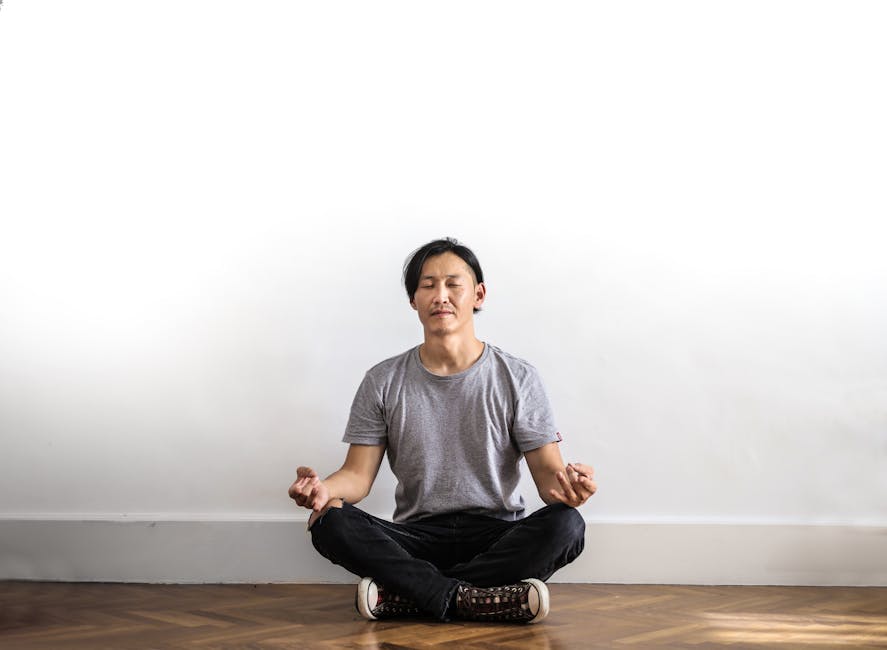
The Stillness Before Creation: Why Silence Is the Source of Everything
There’s a moment just before you speak where nothing exists yet. No word has formed. No sentence has taken shape. There’s just… openness. A kind of pregnant quiet where anything could come next.
Most of us blow past this moment a thousand times a day. We’re so fixated on the words themselves (what to say, how to say it, whether it’ll land) that the silence they emerge from goes completely unnoticed.
But that silence is worth noticing. In fact, it might be the most important thing you ever turn your attention toward.
The Gap Nobody Talks About
Every thought you’ve ever had emerged from somewhere. Not from the previous thought. There’s a gap between them, even if it’s so brief you’ve never clocked it. Thoughts don’t come in a solid, unbroken stream the way it feels from the inside. They arrive in bursts, with tiny pauses between them, like waves with troughs between the crests.
If you sit quietly for a few minutes and watch your thoughts (not engaging with them, just noticing when they appear and when they dissolve), you’ll start to catch those gaps. They’re short at first. A flicker of space between one mental sentence and the next. Easy to miss if you’re not looking.
But here’s where it gets interesting: those gaps aren’t empty. They’re not dead air. Something is present in them — a kind of alert openness, a readiness that hasn’t yet committed to any particular shape.
This is what contemplatives across every tradition have been pointing at for thousands of years. The mystics called it different things: the ground of being, the uncreated, the silent word, the still point. The language varies but the experience is remarkably consistent: there’s a silence prior to all content, and that silence isn’t nothing. It’s the source.
Before “Let There Be Light”
Religious traditions tend to begin their creation stories with a gesture out of silence. “In the beginning was the Word,” but what was there before the Word? “Let there be light,” but what existed in the instant before that command rang out?
You don’t need to be religious to find this worth contemplating. The pattern shows up everywhere. Before the musician plays the first note, there’s a breath of silence. Before the painter touches brush to canvas, there’s a moment of seeing without acting. Before the scientist has the breakthrough insight, there’s often a period of not-knowing, of sitting with the problem without forcing a solution.
Creativity doesn’t come from cramming more information into an already busy mind. It comes from dropping into something quieter. The songwriter who’s been struggling with a verse for hours finally gives up, goes for a walk, thinks about nothing in particular and the melody arrives fully formed. The answer appears when you stop hunting for it.
This isn’t coincidence. It’s the natural mechanics of how insight works. The silence isn’t just the absence of noise. It’s the space where new things can actually form.
Why We Avoid Silence
If silence is this rich, this generative, why do most of us run from it?
The honest answer is that silence confronts us with ourselves. When the noise stops, when you’re not scrolling, not talking, not mentally rehearsing, what’s left is just you, sitting with whatever is actually happening in your inner world. And for a lot of people, that’s uncomfortable.
There might be anxiety there. Or grief that hasn’t been processed. Or a restless sense that something is missing, that you should be doing more, achieving more, being more. Silence strips away the distractions that normally cover all of this over. It puts you face to face with whatever you’ve been avoiding.
This is exactly why it’s valuable.
Not because confronting your stuff is some kind of punishment, but because the silence itself holds those experiences with a spaciousness that your thinking mind doesn’t. When you let a feeling exist in silence (without narrating it, without trying to fix it, without making it mean something) it often does what feelings naturally do when they’re given space: it moves, shifts, and eventually releases on its own.
The silence doesn’t need to be managed. That’s the whole point. It manages itself beautifully if you let it.
What Meditation Is Actually For
There are a lot of reasons people meditate. Stress relief. Better focus. Health benefits. And those are all real. But the deeper purpose of meditation, if you follow the contemplative traditions that gave rise to it, is simply this: to become familiar with the silence that’s already here.
Not to create silence. Not to force your mind to be quiet (which anyone who’s tried knows is about as effective as forcing yourself to fall asleep). But to notice the silence that’s running underneath everything, all the time, like the screen on which the movie of your thoughts plays out.
The thoughts don’t stop. They don’t need to. What changes is your relationship to them. You start to notice the space around them. The gap before a thought arises. The gap after it fades. The quiet background against which the whole mental drama is performed.
And when you rest there, even briefly, something interesting happens. The anxiety about what to think next drops away. The pressure to figure everything out relaxes. You’re just here, awake, aware, not needing anything to happen and not resisting anything that does.
This is what people mean when they talk about being present. It’s not some intense concentration technique. It’s more like un-clenching. Letting go of the effort to make your experience be something other than what it is.
Silence as the Mother of Manifestation
Here’s where it gets practical.
If every creative act, every genuine insight, every moment of real connection begins in silence — then the quality of your silence directly affects the quality of what comes through you.
Think about the difference between speaking from a place of agitation versus speaking after a moment of genuine inner quiet. The words might be similar, but the quality is completely different. One has a frantic, reactive energy. The other has a settled clarity that people can feel.
The same applies to writing, to making art, to problem-solving, to how you show up in your relationships. What you bring to the table is shaped by the depth of the silence you’re drawing from.
Artists and writers have known this intuitively forever. The best work doesn’t come from grinding it out. It comes from periods of receptivity, from getting quiet enough that something genuinely new can surface. You have to empty the cup before it can be filled with something you didn’t put there yourself.
This isn’t passive. It takes a certain kind of discipline to resist the urge to fill every moment with activity. We’re conditioned to equate productivity with constant output. But the most creative people in any field guard their silence fiercely. They know it’s the source, and if you contaminate the source, everything downstream suffers.
Entering the Gap Right Now
You don’t need a meditation retreat to experience this. You can taste it right now, wherever you’re reading this.
Take a breath. At the top of the inhale, before you exhale, pause for a moment. Not a forced breath-hold, just a natural pause. Notice what’s present in that tiny interval. There’s no thought there (or if there is, there’s space around it). There’s just awareness, resting in its own openness.
That’s it. That’s the silence before creation.
You can also try this: finish reading this sentence, then close your eyes for ten seconds and don’t try to think about anything. Don’t try to not-think either. Just let whatever happens, happen, and notice the gaps.
When you open your eyes, the world looks slightly different. Slightly fresher. Colors might seem a bit more vivid. Sounds a bit more crisp. That’s not your imagination. It’s what happens when perception is briefly unclouded by the constant mental commentary that usually overlays everything.
The Silence Isn’t Elsewhere
One of the biggest misconceptions about this is that silence is somewhere you have to get to. That it’s a special state you achieve through years of dedicated practice. That it’s reserved for monks or mystics or people with unusually calm temperaments.
It’s not.
The silence is here right now, in the middle of your busy day, in the middle of your busy mind. It’s not behind the thoughts. It’s not waiting for the thoughts to stop. It’s the space in which thoughts appear and disappear — and that space is always, already present.
You’ve experienced it a thousand times without recognizing it. The moment just after laughter when you’re simply happy and not thinking about anything. The first instant of seeing something beautiful before the mind kicks in with labels and opinions. That half-second after waking up, before you remember who you are and what you have to do today.
Those aren’t brief windows into something extraordinary. They’re glimpses of what’s ordinary — the silent ground that’s always here, normally obscured by our fascination with its content.
What Lives There
People who spend time in this silence, whether through meditation, contemplative prayer, walks in nature, or just quiet moments of not doing anything, tend to report something consistent: the silence isn’t blank. It isn’t a void. It has a quality to it.
Some describe it as fullness. Some call it peace, though not the peaceful feeling that comes and goes. More like a fundamental okay-ness that doesn’t depend on conditions. Some say it feels like being home, even though they can’t explain what that means.
The language fails, and that’s fine. The experience doesn’t need to be put into words to be real. In fact, trying too hard to describe it can actually obscure it. The silence is its own teacher, and what it teaches can’t be reduced to a sentence.
But one thing it consistently communicates, through direct experience rather than philosophy, is this: you are not your thoughts. You are not the mental noise. You are whatever is aware of all of it, and that awareness is untouched, spacious, and quietly alive, no matter what’s happening on the surface.
A Practice of Lingering
If any of this resonates, the practice is simple. Not easy, necessarily, but simple.
Throughout your day, pause. Not dramatically. You don’t need to sit down and close your eyes, though you can. Just pause. Between tasks. Between conversations. Between bites of food. Between thoughts, if you can catch the gap.
And in that pause, don’t fill it with anything. Don’t reach for your phone. Don’t start planning the next thing. Just let the pause be what it is, for however long it lasts. Two seconds, five seconds, a breath.
You’re not trying to accomplish anything in these pauses. You’re not stacking up meditation points. You’re just touching base with the silence that’s already here, reminding yourself that it exists, that it’s available, that it’s been here the whole time waiting for you to notice.
Over time (and this is the part that’s hard to convey but consistently true) the silence starts to seep into the rest of your life. Not because you’re working at it, but because you keep returning to it. It becomes a familiar place. Thoughts still come. Life still happens. But there’s a quieter context holding it all, and you know it’s there even in the noisiest moments.
That’s the real transformation. Not achieving some permanent state of bliss, but recognizing the silence that was never absent — and letting it inform everything you say, do, and create.
The silence was here before your first word. It’ll be here after your last. Everything you’ve ever made or said or loved or lost emerged from it and returns to it.
It’s not something you need to find. It’s what’s left when you stop looking.