So you want to start meditating. Maybe you’ve tried before and didn’t stick with it. Maybe you’ve been curious for years but never knew where to start. Maybe someone recommended it and you’re skeptical but willing to give it a shot.
Here’s the truth: you don’t need special equipment, a pristine room, or hours of free time. You don’t need to sit in a specific pose or wear specific clothes or burn specific incense. What you need is five minutes and a willingness to do basically nothing.
Let me walk you through how to start a meditation practice at home in a way that actually works.
Pick a time and stick with it
The biggest mistake people make with meditation is waiting for the perfect moment. They’ll say things like “I’ll meditate when I have more time” or “I’ll start on Monday when my schedule clears up.” The truth is, that perfect moment never comes. Life stays busy. The window never opens all the way.
What works better is picking a time that’s already somewhat protected and making it non-negotiable. For most people, this means either first thing in the morning before the day gets going, or last thing at night before bed. You’re not competing with anything at those times.
If morning doesn’t work for you, maybe you have a lunch break you could use. Maybe you can meditate in your car in the parking lot before you walk into work. The key is finding a window that exists most days and claiming it.
Start with five minutes. Yes, five. Not thirty. Not an hour. Five. You can do anything for five minutes, and building the habit matters way more than how long you sit. Once five minutes feels automatic - usually after a week or two - you can bump it up to ten. Then maybe fifteen. But there’s no rush.
One more tip: do your meditation at the same time every day. Your body and mind will start to expect it, and that makes it much easier to actually sit down. It’s like how you brush your teeth - you don’t have to force yourself because it’s just what you do at that time.
You don’t need to sit on the floor
Here’s a secret the meditation industry doesn’t want you to know: you can meditate in a chair. You can meditate on your couch. You can meditate in your car in the parking lot before you go into work.
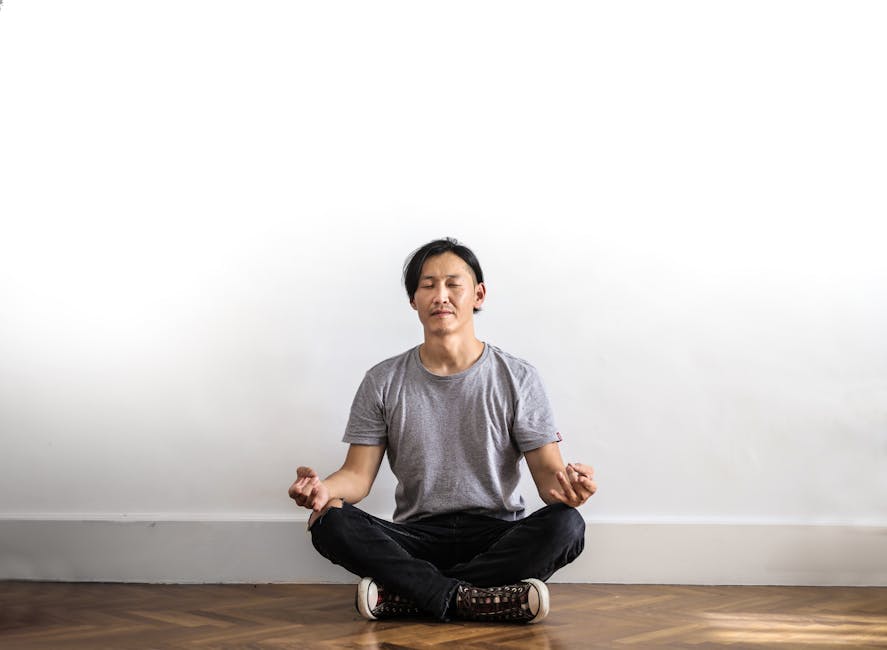
The goal is a position where you can stay awake comfortably and your spine is relatively upright. That’s it. The classic crossed-legged pose is popular because it works, but it’s not required. If you have back problems, sit in a chair. If you want to lie down, you can do that too, but be aware that you’re more likely to fall asleep.
Some people like to use a cushion or a meditation bench. These can be helpful, especially if you want to sit on the floor but find it uncomfortable. But they’re absolutely not necessary. Don’t let lack of equipment stop you from starting.
The most important physical instruction I can give you is this: keep your spine vertical. Your head should be balanced on top of your spine, not flopped forward. This helps you stay alert and allows the energy to move freely. But beyond that, get comfortable however you can.
Your hands can rest wherever feels natural - in your lap, on your knees, or wherever. There’s no wrong way to put your hands. Just let them settle somewhere and forget about them.
Start with your breath because it’s always there
When people first learn to meditate, they often try to “clear their mind.” This is the fastest way to frustration, because your mind is not a computer that you can just turn off. It’s going to think. That’s what it does.
Instead, try focusing on your breath. Not controlling it, just noticing it. Feel the sensation of air coming in through your nose. Notice your chest or belly rising. Feel the breath leaving your body.
You don’t need to breathe in any special way. Just breathe normally. Your only job is to notice the breath and come back to it whenever you realize you’ve drifted off into thought. And you will drift. You’ll think about what you need to buy at the grocery store. You’ll replay a conversation from yesterday. You’ll start planning your week. That’s normal. That’s what minds do.
Each time you notice you’ve drifted and come back to the breath, that’s not failure. That’s the actual practice. Every time you bring your attention back, you’re strengthening the muscle of awareness.
You might also notice the space between breaths. There will be tiny pauses at the top of the inhale and the bottom of the exhale. You don’t need to manipulate these - just notice them. Some people find these pauses particularly restful.
The instructions are simple (but not easy)
Here’s the whole practice in three sentences:
- Sit comfortably with your spine upright.
- Close your eyes or soften your gaze.
- Notice your breath. When you think, come back to the breath.
That’s it. That’s meditation. You do that for five minutes and you’re doing it.
Now, doing it consistently and doing it without wanting to tear your hair out - that’s the challenge. But the actual mechanics are incredibly simple. You don’t need an app. You don’t need a teacher. You don’t need a subscription. You just need to sit and pay attention.
Some people find it helpful to use a timer so they don’t have to watch the clock. You can use your phone, just make sure to turn the sound off so you don’t get startled when it goes off. There are also apps designed specifically for meditation timing if you prefer that.
What to do when your mind won’t shut up
This is the number one thing that stops people. They sit down to meditate and their mind goes absolutely wild. It’s like the moment they try to be quiet, every thought they’d ever had comes rushing in at once.
I want to tell you something: this is not only normal, it’s the universal experience. Every person who meditates deals with a noisy mind. The goal is not to stop thinking. The goal is to notice that you’re thinking and to have a different relationship with your thoughts.
You don’t need to fight your mind or push the thoughts away. Just let them be there, like background noise. You don’t have to chase them out of the room. Just return to your breath, again and again, without judging yourself for getting lost.
Some days your mind will be very busy. Some days it’ll be surprisingly quiet. Both are fine. There’s no good meditation and bad meditation. There’s just sitting and coming back, sitting and coming back.
A helpful metaphor: your thoughts are like cars driving past on a busy street. You’re standing on the sidewalk watching them go by. You don’t have to chase the cars or stop them. You just notice them passing and keep standing there.
If you find yourself getting frustrated with how busy your mind is, that’s actually a sign that you’re doing something right. The frustration shows that you noticed you got lost. And noticing you got lost is the whole point.
How to deal with the weird stuff
As you keep meditating, you might notice some strange things. You might feel like you’re falling. You might see colors or lights behind your closed eyes. You might feel like you’re floating or that your body has gotten huge or tiny. You might feel intense emotions come up out of nowhere.
Don’t panic. These are all normal side effects of quieting the mind. They come and they go. You don’t have to do anything with them. Just notice them and return to your breath.
These experiences can be unsettling if you don’t know what’s happening. Our culture doesn’t prepare us for the strange things that can happen when we sit quietly and go inward. But in the context of meditation, they’re usually just signs that you’re going deeper and your nervous system is releasing old stuff.
If something really unsettling comes up and you feel stuck, it’s okay to open your eyes and take a break. Meditation should never feel traumatic. It’s supposed to be gentle. If you need to stop, stop. You can try again tomorrow.
Build the habit before you optimize
Here’s my advice for the first month: don’t try to optimize anything. Don’t read about different techniques. Don’t buy special cushions. Don’t watch YouTube videos about advanced meditation. Just sit five minutes a day and do the basic breath awareness practice.
Once you’ve built the habit - once you naturally find yourself sitting down without having to force yourself - then you can start exploring. But the foundation has to come first. And the foundation is just showing up, even when you don’t feel like it, even when your mind is noisy, even when you’d rather be doing something else.
The people who stick with meditation are almost never the ones who had magical first experiences. They’re the ones who kept showing up anyway, day after day, even when it felt awkward and pointless.
Think of it like exercise. You don’t start by trying to run a marathon. You start by walking around the block. The meditation habit is the walking around the block. Everything else comes later, if you want it to.
You’re already doing better than you think
If you’ve read this far, you care about this. You want to learn. That matters more than any technique or tool.
So here’s your assignment: tomorrow, set a timer for five minutes. Sit down. Close your eyes. Notice your breath. When you think, come back. Do that once. Then do it again the next day.
That’s it. That’s how you start. And if you do that for thirty days in a row, you’ll have a meditation practice. It’ll be a tiny practice, a humble practice, a five-minute practice. But it’ll be real, and it’ll be yours.
And from there, who knows what might open up.
You might find that after a few weeks, five minutes isn’t enough anymore. That’s a good sign. It means something in you is starting to enjoy the stillness. You might naturally start sitting longer, not because you have to but because you want to.
The most important thing is just to begin. Don’t wait until you have everything figured out. Don’t wait until you buy the right cushion or read the right book. Start right now, exactly where you are, with exactly what you have.