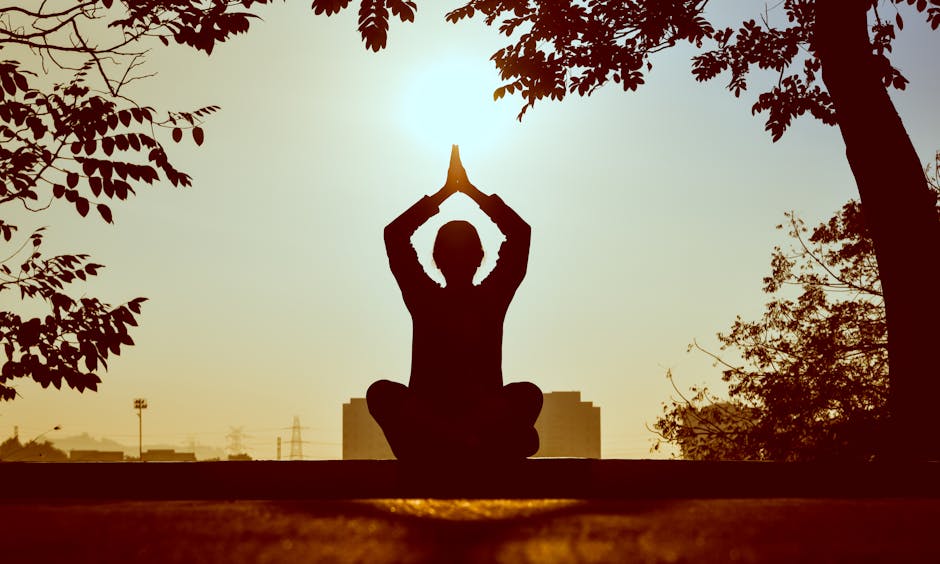
There’s a word that scares people away from meditation faster than almost anything else: emptiness.
Say it in a room of spiritual seekers and watch the faces. Some nod knowingly. Others tighten up. A few look like you just described their worst nightmare: sitting alone with nothing, feeling nothing, being nothing.
And honestly? That reaction makes sense. We’ve spent our entire lives filling things. Filling time, filling silence, filling the gaps between activities with noise and content and plans. The idea that we might deliberately seek out emptiness sounds like voluntarily walking into a desert without water.
But here’s the thing nobody tells you upfront: the emptiness that meditation and spiritual traditions point toward has almost nothing in common with the emptiness you’re afraid of.
The emptiness you fear is absence, something missing, something taken away. The emptiness the mystics describe is closer to the opposite. It’s a fullness so complete, so saturated with presence, that it overflows the capacity of your thinking mind to contain it. And because the mind can’t contain it, the mind calls it “nothing.”
That’s the misunderstanding at the root of so much spiritual confusion.
The Mind’s Version vs. the Heart’s Experience
Your thinking mind is a categorizing machine. It knows things by comparing them to other things. Hot vs. cold. Big vs. small. Something vs. nothing. It works beautifully for navigating the physical world, but it hits a wall when it encounters something that doesn’t fit into categories.
And formless awareness doesn’t fit into categories.
When thoughts quiet down in meditation — when the mental chatter recedes and you’re left with just… this — the mind does a quick inventory and comes up empty-handed. No objects to label. No problems to solve. No stories to tell. By the mind’s accounting system, that registers as “nothing is happening.”
But pay closer attention to that moment. Not with thought — with your direct experience. Is it really nothing? Or is there a quality of aliveness there that’s hard to put words to? A kind of spacious warmth that doesn’t need a name?
Most people who’ve sat quietly enough, for long enough, will tell you the same thing: what seemed empty was actually teeming. Not with objects or thoughts, but with a presence that feels more real than anything the mind usually serves up.
The Sufi mystics had a phrase for this: they called it “the desert of the Real.” Not because it was barren, but because it was stripped of everything nonessential — and what remained was overwhelming in its purity.
Why Emptiness Gets Such Bad Press
Part of the problem is linguistic. In everyday English, “empty” is almost always negative. An empty bank account. An empty house after someone moves out. An empty promise. The word carries grief and loss in its bones.
So when Buddhist teachings talk about sunyata (emptiness), or when Christian mystics describe the via negativa (the way of negation), Western ears hear “nothingness” and recoil. It sounds nihilistic. It sounds depressing. It sounds like the opposite of what anyone would want.
But the original contexts tell a different story. In Buddhism, sunyata doesn’t mean “a void of nothingness.” It means empty of inherent separate existence — empty of the fiction that things exist as isolated, self-contained units cut off from everything else. When you see through that fiction, what remains isn’t less than what you started with. It’s infinitely more. It’s the interconnected, luminous, alive fabric of reality itself.
Similarly, when Meister Eckhart talked about the “desert of the Godhead” — a reality beyond all images and concepts of God — he wasn’t describing a wasteland. He was describing something so full that no container of thought could hold it.
The emptiness they’re all pointing to is void of limits, not void of being.
The Thinking Mind Calls It Empty. The Silent Heart Calls It Home.
There’s a moment in meditation practice that many people have experienced but few talk about openly. You’re sitting. The usual noise is there — grocery lists, arguments you’re rehearsing, song lyrics on repeat. Slowly, the noise thins. Not because you forced it, but because attention settled into something deeper.
And then there’s a gap.
It might last half a second. It might stretch longer. In that gap, you aren’t thinking about anything. You aren’t doing anything. You aren’t even trying to be aware. And yet — awareness is there. Clear, uncluttered, quietly alive.
The mind, if it comes back quickly, will say: “Nothing happened.” Or: “I spaced out.” But something did happen. You tasted what you are when you’re not maintaining the story of yourself. And that taste, even briefly, often leaves a mark. A quiet sense that you touched something real. Something you’ve been circling around for a long time.
That gap is what the traditions are pointing to when they talk about emptiness. It’s not a blank space. It’s the space where you — the narrated, storied, worried version of you — aren’t taking up all the room. And in your temporary absence, what’s actually there gets a chance to register.
What’s actually there is presence. Awareness. Being. Call it what you want. It doesn’t care about the label. It’s there before your first thought in the morning and after your last thought at night. It’s there in the gap between every sentence you’ve ever spoken and every breath you’ve ever drawn.
It’s the most ordinary thing in the world, and also the most extraordinary.
The Breathing Infinite: Emptiness as the In-Breath
One way to understand this is through the rhythm of breathing.
Think about the in-breath — that moment when you draw air into your lungs. There’s a natural withdrawal from the outer world. Your attention turns inward. For a fraction of a second, everything simplifies.
Now imagine that same movement at a deeper level. The in-breath of consciousness isn’t just pulling air — it’s pulling back from all the forms and objects and stories that usually fill your attention. It’s returning, however briefly, to what was there before all those things appeared.
This is what the Breathing Infinite framework describes: reality has an in-breath and an out-breath. The in-breath is the return to source, to the formless ground that never changes. The out-breath is the flow into form — creativity, expression, action, the whole colorful display of life.
Emptiness, in this understanding, isn’t a dead end. It’s the pause at the top of the in-breath. It’s the still point where everything is gathered before being released again. It’s the pregnant silence before the next word is spoken.
And it’s full. Absolutely, startlingly full. Full of everything that could be but hasn’t been expressed yet. Full of infinite potential that hasn’t narrowed into any particular shape.
The emptiness is the womb. And the universe is what keeps being born from it.
What Happens When You Stop Running from It
Most of us have an automatic program running that keeps us away from emptiness. The moment things get quiet, we reach for the phone. When there’s a gap in conversation, we fill it. When we wake up at 3 AM with nothing between us and the silence, we feel a creeping dread and flip on a podcast.
This isn’t a character flaw. It’s the mind doing what it thinks its job is: maintaining the sense of a continuous, coherent self. Silence threatens that project because in silence, the self-story pauses. And when the story pauses, the mind panics: If I’m not narrating myself, do I still exist?
The answer, of course, is yes. But not in the way the mind expects.
What exists in that silence isn’t the narrated self — the one with the name and the history and the preferences. What exists is the awareness in which all those narratives appear. And that awareness doesn’t need a story to be what it is. It’s perfectly fine without your autobiography running in the background.
When you stop running from the silence and actually turn toward it — gently, without forcing anything — something surprising happens. The dread dissolves. Not because you conquered it through willpower, but because you discovered there was nothing to dread. The emptiness you feared was actually the most peaceful, most welcoming, most intimate thing you’ve ever encountered.
People describe it differently. Some say it feels like coming home after being away for years. Others say it’s like a weight lifting that they didn’t know they were carrying. Some just cry — not from sadness, but from the relief of finally meeting what was always there.
A Different Kind of Knowing
The mind knows through grasping. It grabs onto concepts, categorizes them, files them away. That’s its method and it’s good at it.
But there’s another kind of knowing that doesn’t grab. It receives. It allows. It’s the knowing that’s operating when you’re moved by music before you analyze it, or when you sense the mood of a room before anyone speaks. It’s not dumber than conceptual knowing — it’s actually more intimate, more direct.
This is the knowing that operates in emptiness. When thoughts settle, you don’t become unconscious. You become conscious in a different way — a way that doesn’t require an object to be conscious of. Awareness aware of itself. Knowing knowing itself.
It sounds circular when you describe it with words, and that’s the point. Words are built for subject-object relationships: a knower over here, a known over there. But in the fullness of emptiness, that separation collapses. There’s just the knowing. Luminous, clear, self-evident.
This is what the Indian traditions call sat-chit-ananda: being-consciousness-bliss. Not three things added together but one reality recognized from three angles. And it’s what you are, underneath and before every story you’ve ever told about yourself.
Practical Ways to Touch This
You don’t need to be a monk or sit in a cave for decades to taste the fullness of emptiness. It’s actually embarrassingly close. Here are a few entry points:
The gap between thoughts. You don’t need to stop your thinking. Just notice: between one thought ending and the next beginning, there’s a tiny pause. Don’t try to extend it. Just notice it. Over time, that noticing itself becomes a doorway.
The moment before naming. When you see a flower, there’s a split second before the mind says “flower.” In that split second, there’s pure perception — color, form, aliveness — without a label. That nameless moment is a window into the fullness.
The stillness beneath sound. Even in a noisy room, there’s something still that holds the noise. Like the silence beneath a symphony. You can tune into that background stillness without needing the noise to stop.
Resting as awareness, not as a person. Instead of meditating as yourself trying to get somewhere, try resting as the awareness that’s already present. You’re not generating it. You’re not improving it. You’re just recognizing it, the way you recognize air — it was always there, you just weren’t paying attention.
The Fear Was the Last Guardian
Here’s the quiet truth that waits at the bottom of all this: the fear of emptiness was the last thing standing between you and the fullness you’ve been searching for.
Every spiritual longing, every vague sense that something is missing, every homesickness that doesn’t attach to any particular place — all of it points to this formless presence that you’ve been avoiding because you thought it was a void.
It’s not a void. It’s home. It’s what you are when you stop performing yourself. It’s the ground that was holding you the whole time you were searching for ground.
And you don’t need to believe any of this. You can check for yourself. Right now, in the silence between reading this sentence and whatever comes next — what’s there?
Not what you think is there.
What’s actually there.
That.