The Cloud of Unknowing: What the Medieval Mystics Knew About Not Knowing
Sometime in the fourteenth century, an anonymous English monk sat down and wrote one of the strangest spiritual manuals in Western history. We don’t know his name. We don’t know where he lived. We barely know anything about him at all.
Which is sort of perfect, given what he wrote about.
The book is called The Cloud of Unknowing, and its central instruction is disarmingly simple: place a cloud of forgetting beneath you, covering everything you know, and reach upward into the cloud of unknowing with nothing but a “naked intent” toward God. Don’t think about God. Don’t visualize God. Don’t try to understand God. Just… want. And not-know.
That’s the whole practice.
If this sounds similar to what you’ve encountered in Eastern contemplative traditions, that’s because it is. The author of The Cloud was doing something that Zen masters, Advaita teachers, and Dzogchen practitioners have been doing for centuries: pointing beyond the mind’s capacity to grasp its own source.
But he was doing it in medieval English, in a Christian framework, six hundred years before anyone in the West had heard of nonduality. And what he discovered still holds up.
What the Cloud of Unknowing Actually Means
The title throws people off. “Unknowing” sounds negative, like ignorance or confusion. But the author is pointing to something specific: the recognition that whatever God is (or whatever ultimate reality is, if you prefer non-religious language), it can’t be captured by thought.
Not because it’s too far away. Because it’s too close.
You can think about awareness, but you can’t think your way into it. You can form concepts about the source of all experience, but every concept falls short, because the source is what concepts appear within. You’re trying to see the eye with the eye. It doesn’t work.
The author puts it plainly: “By love he can be gotten and holden, but by thought, never.” You can’t think your way to what you are. But you can rest in it. You can orient toward it with what he calls a “naked intent,” a bare wanting that doesn’t dress itself up in images or ideas.
This is apophatic theology, the tradition of saying what God is not rather than what God is. And it’s not just a Christian thing. The Tao Te Ching opens with “The Tao that can be spoken is not the eternal Tao.” Meister Eckhart prayed to God to rid him of God, meaning to dissolve his concepts of God so the actual reality could be met directly. The Zen tradition talks about “don’t-know mind.” The Hindu tradition speaks of neti neti, not this, not this.
Different traditions. Same recognition. Whatever you truly are exceeds the mind’s ability to pin it down.
Why This Practice Is So Hard (And So Simple)
Here’s the paradox of unknowing: it’s the simplest thing in the world, and almost nobody can do it.
I mean that literally. The instruction is: stop trying to know. Stop trying to figure it out. Stop reaching for the next concept, the next framework, the next spiritual experience that will finally make everything click. Just stop. And stay stopped.
That’s it.
The problem is that the mind hates this. The mind exists to know things. It categorizes, labels, analyzes, compares. That’s its job, and it’s very good at it. Asking the mind to stop knowing is like asking your lungs to stop breathing. It feels like you’re asking for death.
And in a sense, you are. Not physical death. The death of the one who needs to know. The one who needs to have it figured out. The one who collects spiritual experiences like stamps and arranges them into a coherent story called “my spiritual progress.”
That one has to go. Not because there’s anything wrong with understanding or learning or thinking. Those are wonderful tools. But they can’t take you where you want to go. At some point, the raft has to be set down. You can’t carry it onto the other shore.
I remember the period when this really hit home for me. I’d been studying nonduality for years. Reading Nisargadatta, Ramana Maharshi, Rupert Spira. I could explain the nature of consciousness with reasonable clarity. I had frameworks, models, ways of articulating what awareness is and isn’t.
And none of it was doing anything.
The knowledge was real, in the sense that it was accurate. But it was sitting on the surface, like oil on water. It wasn’t penetrating. Because the knowing itself had become a barrier. I was so busy understanding awareness that I never simply rested as it.
The shift happened when I gave up trying to understand. Not dramatically. Not as a decision. More like a settling. The way you stop treading water not because you decided to, but because you realized the water was shallow enough to stand in.
The Cloud of Forgetting
One of the most underappreciated aspects of The Cloud of Unknowing is the companion concept: the cloud of forgetting.
The author instructs you to place a cloud of forgetting beneath you, between yourself and all created things. All your knowledge. All your memories. All your spiritual achievements and understandings. Everything you think you know about yourself, about reality, about God. Put it under the cloud.
This isn’t about erasing your memory or pretending you don’t know things. It’s about recognizing that everything you know belongs to the world of objects, of things that can be thought about. And what you’re reaching for isn’t an object. It can’t be thought about. It can only be met in the space where thinking stops.
The cloud of forgetting is the willingness to let your entire spiritual resume become irrelevant. Every insight you’ve had. Every experience. Every teacher you’ve sat with. Every book you’ve read. Including this one.
None of it is you. All of it is content. And what you are is the space in which content appears.
This is brutal for spiritual seekers. We love our collections. “I’ve had this experience.” “I’ve understood this truth.” “I’ve sat with this teacher.” These become identity props. They make us feel like we’re getting somewhere. The cloud of forgetting asks: what if you’re already there, and the collection is what’s obscuring the view?
How to Practice Unknowing
Let me get practical, because theory without practice is just more content for the mind to chew on.
Start with the question
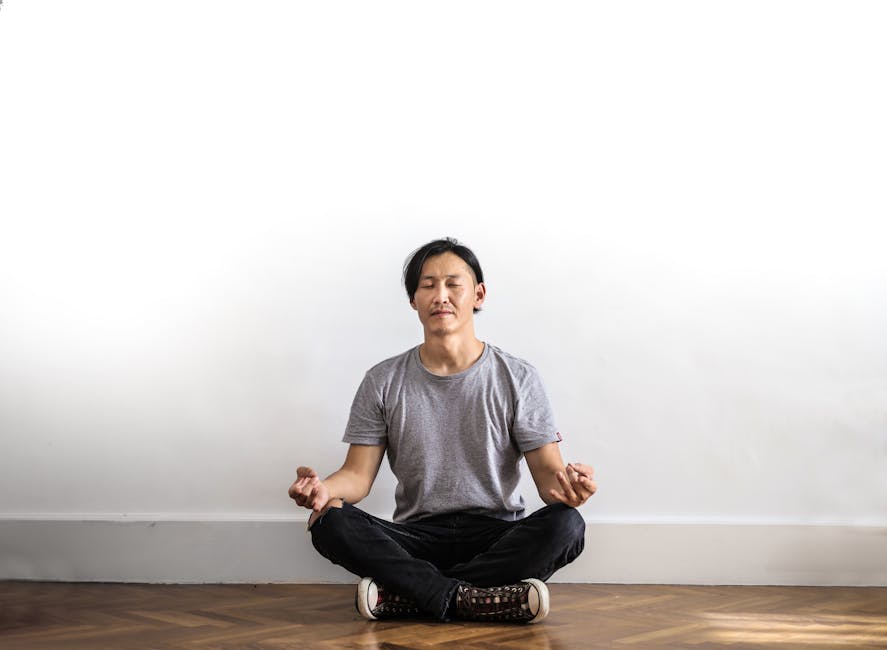
Sit quietly. Ask yourself: what am I, really?
Don’t answer. This is crucial. Every answer is a concept, and concepts are what you’re setting down. You’re not looking for a better answer to the question. You’re looking for what’s there when there’s no answer at all.
Stay with the question the way you’d stay with a friend in silence. Not awkward silence. Companionable silence. The kind where nothing needs to be said because presence is enough.
When an answer does arise, and it will, let it go. Not aggressively. Just don’t pick it up. It’s a thought. You’ve had thousands of those. Let this one pass like the others.
What remains when the answer dissolves? That remaining is what the author of The Cloud calls the naked intent toward God. You could also call it awareness resting in itself. Or being without object. Or just… this.
Use a single word as anchor
The author of The Cloud of Unknowing recommends choosing a single short word, like “God” or “love,” and using it as a kind of anchor. Not to think about. Not to analyze. Just to gently hold in awareness, like a stone in the palm of your hand.
When the mind wanders into thinking, which it will, you touch the word again. Not as a mantra with magical properties. More like a pointer that keeps redirecting attention toward the unknowable.
If “God” doesn’t work for you, try “here” or “this” or even just the breath. The word doesn’t matter. What matters is the direction it points: away from content, toward the space content appears in.
This practice is remarkably similar to centering prayer, which was developed by Thomas Keating and Basil Pennington in the twentieth century, directly inspired by The Cloud of Unknowing. It’s also not far from shikantaza in Zen, just sitting, or the self-inquiry of Ramana Maharshi. Strip away the cultural packaging and the same gesture is there: let go of knowing. Rest in what remains.
Let the silence be intelligent
One fear that comes up is that unknowing will make you stupid. That if you stop grasping with the mind, you’ll lose access to your intelligence.
The opposite happens. When the compulsive thinking settles, a different quality of intelligence becomes apparent. Not the intelligence that categorizes and analyzes, though that remains available when needed. A deeper intelligence. The kind that sees the whole picture at once. The kind that knows without needing to think about it.
You’ve experienced this. Moments when you just knew what to do, without deliberation. Times when the right words came without rehearsal. Situations where understanding arrived fully formed, not as a chain of reasoning but as a sudden recognition.
That intelligence lives in the silence. The thinking mind is its translator, not its source.
What You Find in the Not-Knowing
Here’s what took me by surprise about this practice. I expected not-knowing to feel like deprivation. Like going hungry. Instead, it felt like relief.
All that knowing was heavy. All those frameworks and models and ways of explaining reality to myself were work. The mind was always running, always processing, always trying to hold the whole thing together. And when I set it down, even temporarily, what showed up was not confusion. It was freedom.
The fourteenth-century mystic who wrote The Cloud describes this as a kind of “darkness,” but not the darkness of absence. The darkness of excess. Too much presence for the mind to process. Too much reality for thought to contain. Like staring at the sun: not nothing, but too much of something.
Mystics from every tradition describe this same paradox. The dazzling darkness. The luminous void. The fullness of emptiness. These aren’t contradictions. They’re the mind’s honest attempt to report on something that exceeds its categories.
In the Breathing Infinite framework, this is the deepest point of the inhale. The moment of complete return, where form dissolves back into its source. Not as annihilation, but as recognition. You haven’t gone anywhere. You’ve just stopped pretending you were ever separate from what’s here.
And from this place, this placeless place, everything begins again. The exhale. The return to form. Thought, action, relationship, creativity. But now infused with something. Not knowledge. Something better. The scent of where you’ve been, even if you can’t name it.
The Problem with Spiritual Knowledge
I want to be honest about something. I love learning about this stuff. I read everything I can find on consciousness, on nonduality, on contemplative practice. And I don’t think that’s a problem.
But I’ve noticed a pattern in myself and in others: spiritual knowledge can become a substitute for the direct experience it’s pointing toward.
You read about the nature of awareness and feel like you’ve tasted it. You learn about unknowing and feel like you’ve done it. The mind is extraordinarily good at simulating understanding. It can create a convincing replica of insight without the actual shift in being that real insight brings.
The test is simple: has anything changed in how you live? Not in what you think or believe or can articulate. In how you actually show up. In your body. In your relationships. In the moments when you’re stressed or scared or confronted with something you can’t control.
If the knowledge hasn’t landed there, it’s still on the surface. Still oil on water. And the prescription is always the same: less knowing, more being. Less thinking about it, more resting in it. Set down the book. Close the eyes. Enter the cloud.
Unknowing in Daily Life
You don’t need a meditation cushion for this. Unknowing is available in any moment where you’re willing to not know.
Someone asks you a question and you don’t have the answer. Instead of scrambling to produce one, rest in the not-knowing. Feel what it’s like to genuinely not know. There’s a spaciousness there. An honesty. A strange relief.
You’re facing a decision and can’t figure out what to do. Stop trying to figure it out. Let the mind spin down. See what emerges from the silence rather than from the analysis.
You catch yourself mid-sentence, explaining your spiritual understanding to someone, and you realize you’re performing. You’re reciting what you know rather than speaking from what you are. Stop. Breathe. Let the cloud roll in. Speak from not-knowing, and notice how different the words are.
This is the practice. Not once a day on a cushion. All day. A willingness to meet each moment without the armor of certainty.
The author of The Cloud would tell you this is the beginning of real prayer. Not talking to God. Not asking for things. Not even praising or thanking. Just being present with what’s beyond your comprehension. Resting in the gap between what you can think and what is actually there.
The Humility of Not-Knowing
There’s a cultural resistance to unknowing, and I think it’s worth naming. We live in a time that prizes knowledge. Expertise. Having the answer. The person who says “I don’t know” is seen as unprepared. The person who says “I can’t grasp this” is seen as failing.
But the mystics, across every tradition, say otherwise. They say the deepest wisdom is the recognition that you don’t know, can’t know, and don’t need to know. That what you are is beyond the reach of the knowing mind, and that this beyond is not a limitation but a liberation.
Socrates said it first, or at least said it most famously: “I know that I know nothing.” But he wasn’t being modest. He was describing the actual experience of someone who has pressed their knowing to its limit and found that the ground drops away.
The Cloud of Unknowing is that ground dropping away. And what you discover, if you’re willing to fall, is that you don’t need ground. You never did. What you are doesn’t need support. It is the support.
One Last Thing
Every concept of yourself, no matter how spiritual, misses the mark. Read that again.
It means your best understanding of who you are, your most refined spiritual insight, your most transcendent experience, all of it is still a concept. Still a thought appearing within something that is not a thought.
The invitation isn’t to get a better concept. It’s to step out from behind all concepts and see what’s left.
What’s left can’t be named. And it doesn’t need to be. It’s closer than your own breath, more intimate than your own heartbeat. It’s what’s looking out of your eyes right now, reading these words, wondering whether this is true.
You can’t find it by knowing. You can only find it by stopping. By entering the cloud. By letting the unknowing do what all your knowing couldn’t.
And when you do, you’ll discover what the anonymous monk discovered six centuries ago: there is nothing to fear in your own nature. The cloud isn’t darkness. It’s home.
If you’d like to go deeper into contemplative practice and nondual awareness, I’ve put together some free eBooks that explore these themes from a practical, non-religious angle.